
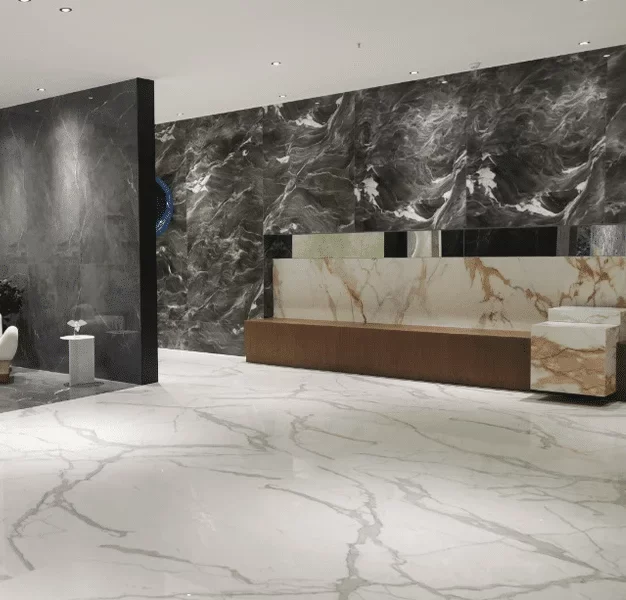




Quartz
Quartz vs Granite Countertops
Description
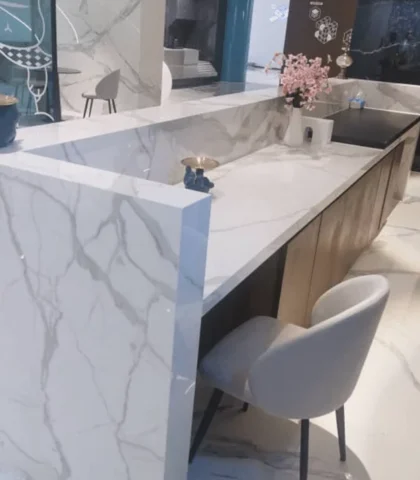
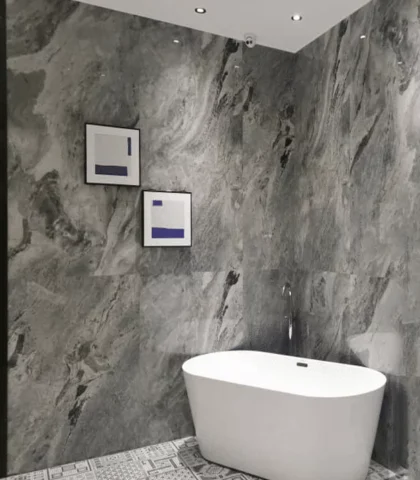
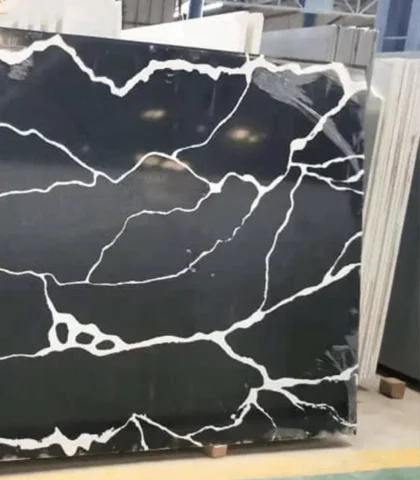
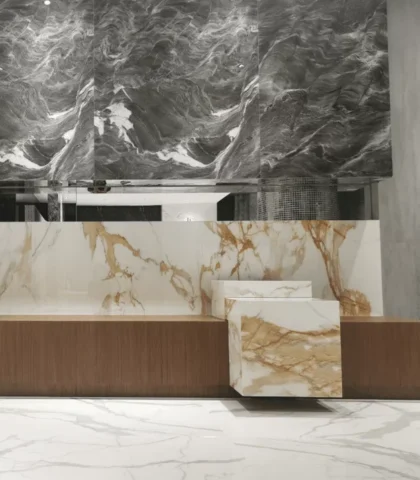
CIDG Egypt helps you weigh quartz vs granite countertops so you can pick the right worktop for your kitchen or bathroom. Quartz is an engineered surface made from about 90% ground natural quartz and resin, while granite is a natural stone cut and polished straight from the quarry. The two look similar on a finished counter, but they behave differently on porosity, maintenance, colour choice and price. As a supplier of both, we give you a straight comparison rather than a sales pitch for one material.
Talk to our stone team: Get a free quote on WhatsApp | Get a quote within 24 hours | Request a free sample
Quartz vs granite countertops at a glance
The headline difference is engineering versus nature. Quartz countertops are manufactured, so they are non-porous and need no sealing, with colour that stays consistent across slabs. Granite countertops are natural, so each slab has unique veining and movement, but the stone is porous and needs periodic sealing to resist stains. Both are very hard and long-lasting; the better choice depends on whether you value uniform looks and zero maintenance, or a one-of-a-kind natural pattern.
Product Information
Quartz vs granite: properties compared
Here is how engineered quartz stacks up against natural granite on the things that matter for a countertop:
- Porosity: quartz is non-porous and never needs sealing; granite is porous and needs sealing once or twice a year.
- Stain resistance: quartz fully resists stains; granite can stain if a spill sits on an unsealed area.
- Colour and pattern: quartz offers consistent, repeatable colours; granite gives unique natural veining.
- Heat: granite handles hot pans better; quartz resin can scorch under very high heat, so use trivets.
- Maintenance: quartz is wipe-clean only; granite needs sealing plus pH-neutral cleaners.
Both outperform softer surfaces like marble for everyday durability.
Suitability & Installation
Quartz vs granite countertops comparison table
Use this side-by-side to match the surface to your priorities:
| Factor | Quartz countertops | Granite countertops |
|---|---|---|
| Material | Engineered (~90% quartz + resin) | Natural stone |
| Porosity | Non-porous | Porous |
| Sealing | Not required | Required periodically |
| Stain resistance | Excellent | Good once sealed |
| Heat resistance | Good (use trivets) | Very good |
| Colour | Consistent, wide range | Unique natural veining |
| Best for | Low-maintenance, uniform look | Natural, one-of-a-kind look |
Choose quartz if
You want zero sealing, uniform colour and maximum stain resistance for a busy kitchen.
Choose granite if
You prefer a natural, unique pattern and top heat tolerance, and don't mind occasional sealing.
Where Can I View This Stone
Request a quartz sample
The easiest way to decide between quartz and granite is to compare them in your own light. We can send samples of both so you can see the colour, finish and pattern next to your cabinets. Contact us through our contact page or send your project details via the inquiry form for a quote within 24 hours.
Product Specialist
Quartz vs granite countertops frequently asked questions
Which is more durable, quartz or granite?
Both are very durable. Quartz resists stains and chips slightly better because it is engineered and non-porous, while granite handles heat better. For everyday kitchen wear, quartz needs less care since it never requires sealing.
Is quartz or granite easier to maintain?
Quartz is easier to maintain. It is non-porous and only needs soap and water, with no sealing ever. Granite is porous and must be sealed periodically and cleaned with pH-neutral products to avoid staining and etching.
Which is cheaper, quartz or granite?
Prices overlap and depend on the colour, slab and finish you choose. Premium granite and premium quartz can cost the same, so we recommend requesting a quote for both based on your exact countertop measurements.
Order quartz surfaces from CIDG Egypt
- WhatsApp / Phone: +20 100 164 9770
- Email: [email protected]
- Location: Cairo, Egypt
- Website: www.cidegypt.com
Request