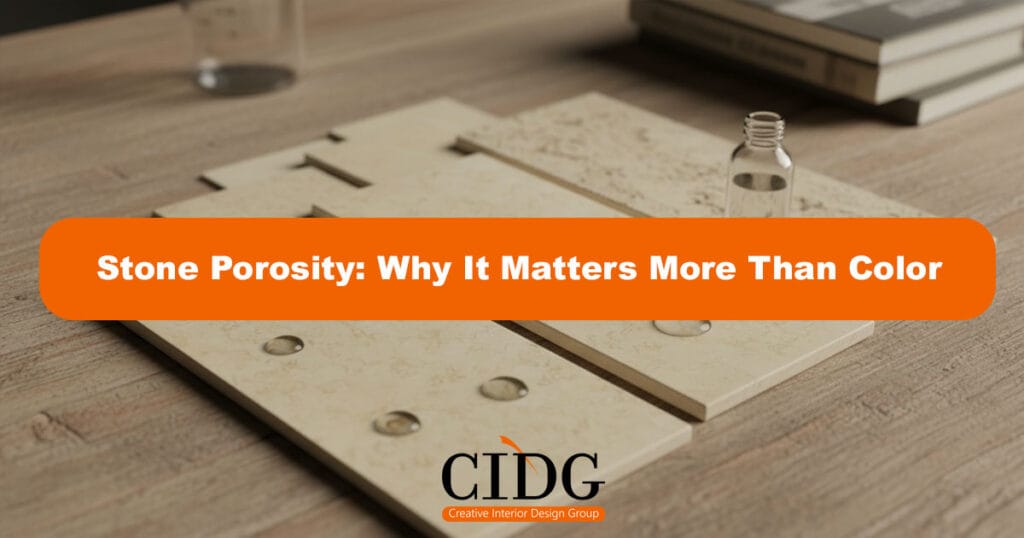
Understanding Stone Porosity: Why It Matters More Than Color
When choosing natural stone, many decisions are made based on color, pattern, and overall appearance. While aesthetics are important, one of the most critical—and often overlooked—factors is stone porosity. In practical terms, porosity has a far greater impact on durability, maintenance, and long-term performance than color ever will.
Understanding stone porosity allows architects, designers, and homeowners to select materials that perform correctly in their intended environment, whether indoors or outdoors.
What Is Stone Porosity?
Stone porosity refers to the number and size of microscopic pores within the stone. These pores determine how much moisture, air, and contaminants a stone can absorb.
The higher the porosity, the more absorbent the stone. Low-porosity stones resist water penetration, stains, and weathering, making them more suitable for demanding applications.
Why Porosity Matters More Than Color
Color is a visual attribute, but porosity is a performance characteristic. Two stones may look nearly identical yet behave very differently once installed.
Highly porous stones are more vulnerable to staining, freeze-thaw damage, salt crystallization, and surface deterioration. Low-porosity stones offer greater resistance to environmental stress and require less maintenance over time.
This is why professional stone selection prioritizes porosity data over surface appearance.
Porosity Differences Between Stone Types
Granite: Low Porosity and High Performance
Granite is one of the least porous natural stones, making it exceptionally durable. This is why options such as Egyptian granite are widely used in high-traffic areas, exterior paving, and architectural applications.
Premium varieties like New Halayeb granite, Black Aswan granite, and Aswan red granite combine low water absorption with exceptional strength, making granite Egypt a reliable choice for long-term performance.
Marble: Moderate Porosity with Proper Application
Marble has a moderate level of porosity, which means it absorbs moisture more readily than granite but can still perform well when correctly specified.
High-quality options such as Egyptian marble, including Galala marble, Galala beige marble, Triesta marble, Sunny marble, and Silvia marble are commonly used for interior flooring, wall cladding, and decorative elements.
When sealed properly and installed in appropriate environments, marble delivers both beauty and reliability.
Limestone: Higher Porosity with Natural Benefits
Limestone is naturally more porous than granite and marble, which gives it a softer appearance and warmer texture. This porosity makes limestone ideal for certain applications when properly selected.
Textured limestone solutions such as Dijon tumbled limestone and Dijon tumbled limestone pavers perform well in outdoor spaces due to their slip resistance and ability to age gracefully.
How Porosity Affects Maintenance and Longevity
Porous stones require more proactive care, including sealing and proper cleaning routines. Without this, stains and moisture infiltration can compromise the stone’s appearance and structure.
Low-porosity stones demand less maintenance and offer superior resistance to environmental exposure, making them ideal for exteriors and wet areas.
Porosity and Stone Finishes
Finishes play a role in how porosity behaves at the surface level. Polished finishes tend to reduce surface absorption, while textured finishes expose more pores.
Architectural finishes such as split face stone emphasize texture and depth but should be selected with porosity and exposure in mind.
Climate and Application Considerations
Porosity becomes especially important in regions with moisture, temperature changes, or freeze-thaw cycles. Stones used outdoors must withstand repeated water absorption and evaporation without deteriorating.
This is why material selection for projects using marble Egypt and granite from Egypt is guided by laboratory testing rather than appearance alone.
How Professionals Evaluate Stone Porosity
Architects and suppliers rely on standardized laboratory tests that measure water absorption percentage, density, and compressive strength.
These values provide objective insight into how the stone will perform over time and whether it is suitable for its intended use.
Frequently Asked Questions (FAQs)
Is low porosity always better?
Not always. Low porosity is ideal for exteriors and wet areas, but higher-porosity stones can perform beautifully indoors with proper care.
Does stone color indicate porosity?
No. Color has no direct correlation with porosity. Two stones of the same color can have very different absorption rates.
Can porous stone be sealed?
Yes. Sealing significantly reduces absorption and protects the stone, but it does not eliminate porosity entirely.
Which stone has the lowest porosity?
Granite generally has the lowest porosity, making it highly durable and low maintenance.
Why do professionals prioritize porosity data?
Because porosity directly affects durability, maintenance, and long-term performance, especially in challenging environments.
📞 Contact CID Egypt for Orders & Inquiries
📞 Mobile: +20 100 164 9770
💬 WhatsApp: https://wa.me/201001649770
✉️ Email: marketing@cidegypt.com
🌐 Contact Form: