Choosing the Right Natural Stone for Fireplaces and Fire Pits
Using natural stone in fireplaces and fire pits is not only about adding warmth and character to a space. It is also about ensuring safety, durability, and resistance to extreme heat. Choosing the wrong stone can lead to cracking, discoloration, or structural failure over time.
This guide simplifies the decision-making process by explaining how different stones react to heat, which materials offer superior heat resistance, and how to balance performance with long-term value.
Why Heat Resistance Matters in Fire Features
Fireplaces and fire pits generate extremely high temperatures that rise rapidly and cool down just as quickly. These thermal cycles create stress on any surface exposed to heat.
When a stone cannot withstand these conditions, visible cracks may appear, colors can change permanently, and in severe cases, pieces of stone may break away. Many people assume all stone is fireproof, which often leads to costly mistakes.
Understanding heat resistance helps protect your investment, ensures long-term performance, and keeps fire features safe and visually appealing for years.
How Natural Stone Reacts to Heat
When exposed to high temperatures, natural stone expands. As it cools, it contracts. If this expansion and contraction occur too rapidly, the stone experiences thermal shock, which can cause cracking and surface failure.
Stone density plays a major role here. Dense stones absorb heat more slowly and distribute it evenly, reducing the risk of damage. This is why material selection is critical for fire-related applications.
Best Heat-Resistant Natural Stones Explained
Granite
Granite is formed deep within the earth under intense heat and pressure, making it one of the most heat-resistant natural stones available. Its dense structure and low porosity allow it to handle extreme temperatures with minimal risk of cracking.
High-quality options such as Egyptian granite, including premium varieties like New Halayeb granite, Black Aswan granite, and Aswan red granite, are excellent choices for fireplace surrounds and outdoor fire pits.
Although granite comes at a higher initial cost, its durability, safety, and minimal maintenance requirements make it a long-term investment. This is why granite Egypt remains a preferred material for high-heat applications.
Limestone
Limestone offers stable heat performance when properly selected and installed. Its fine-grained structure helps reduce the risk of thermal shock, making it suitable for modern fireplace designs.
Outdoor fire pits often benefit from textured limestone options such as Dijon tumbled limestone and Dijon tumbled limestone pavers, which provide both heat resistance and slip resistance.
Marble (With Considerations)
Marble can be used in fireplaces, but it requires careful selection and proper installation. While marble is heat-resistant, it is more sensitive to discoloration and surface changes over time.
Durable choices like Egyptian marble, Galala marble, Galala beige marble, Triesta marble, Sunny marble, and Silvia marble are commonly used for indoor fireplace surrounds where heat exposure is more controlled.
Explaining Price Differences to Customers
One of the most common questions customers ask is why some stones are more expensive than others. Heat resistance is a major factor.
Dense, heat-resistant stones require more raw material, specialized cutting techniques, and advanced finishing processes. These factors increase cost but significantly improve safety, longevity, and performance.
Lower-cost stones may appear similar initially, but they often require frequent repairs or replacement, increasing the total cost over time.
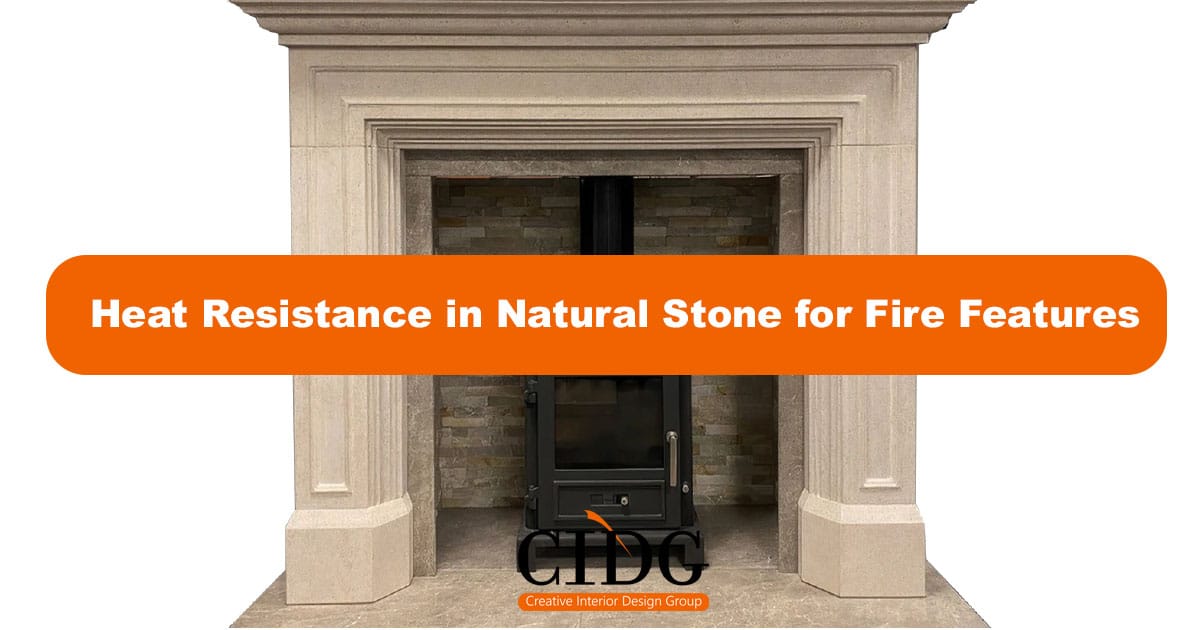
Indoor vs Outdoor Fire Applications
Indoor Fireplaces
Indoor fireplaces produce controlled heat with gradual temperature changes and minimal moisture exposure. In these conditions, aesthetics play a larger role alongside heat resistance.
Materials like marble Egypt selections and polished or honed granite perform well indoors when installed correctly.
Outdoor Fire Pits
Outdoor fire pits face harsher conditions, including rapid temperature changes, rain, wind, and humidity. Stones used outdoors must resist thermal shock and weathering.
Granite, limestone with textured finishes, and durable wall cladding materials such as split face stone are ideal for these environments.
Importance of Proper Installation
Even the most heat-resistant stone can fail if installed incorrectly. Heat-rated adhesives, proper spacing, and expansion joints are essential.
Expansion joints allow the stone to move naturally during heating and cooling cycles, preventing internal pressure that leads to cracks.
Professional installation ensures optimal performance, safety, and durability.
Stone Finishes and Their Impact on Heat Performance
Stone finishes influence how well a surface handles heat and visible wear.
- Textured and natural finishes: Better at concealing heat marks and improving grip.
- Highly polished finishes: More likely to show discoloration, surface stress, and cracks over time.
Choosing the right finish is just as important as selecting the stone itself.
Common Misconceptions About Stone and Fire
A common misconception is that all stone is completely fireproof. While many stones are heat-resistant, not all perform well under direct flame exposure.
Color, weight, or appearance alone does not determine heat performance. Education and proper material selection are essential to avoiding long-term damage.
How to Choose the Right Stone for Your Fire Feature
When selecting stone, consider where the fire feature will be located, how frequently it will be used, and whether flames will come into direct contact with the stone.
The goal is not only to create visual impact, but to ensure long-term safety, durability, and value.
Frequently Asked Questions (FAQs)
Which natural stone is best for fireplaces?
Granite is the best overall choice due to its high density, low porosity, and excellent heat resistance.
Can marble be used around fireplaces?
Yes, marble can be used for indoor fireplaces with controlled heat, but it may discolor over time if exposed to direct flames.
Is limestone safe for fire pits?
High-quality limestone with proper finishes, such as tumbled limestone, performs well in fire pit applications.
Why does stone crack around fire features?
Cracking usually occurs due to thermal shock, poor installation, or using stone not rated for high heat exposure.
Does stone finish affect heat resistance?
Yes. Textured and natural finishes perform better under heat stress than highly polished surfaces.
📞 Contact CID Egypt for Orders & Inquiries
📞 Mobile: +20 100 164 9770
💬 WhatsApp: https://wa.me/201001649770
✉️ Email: marketing@cidegypt.com
🌐 Contact Form: https://www.cidegypt.com/contact-us/