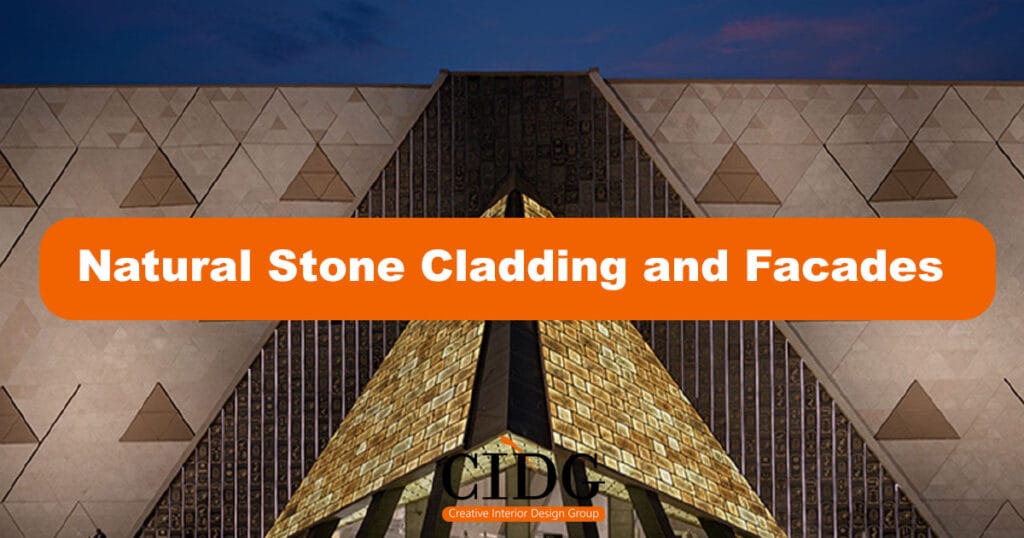
Beyond the Floor: Elevating Exteriors with Natural Stone Cladding and Facades
Natural stone is often associated with floors, patios, and pathways. However, its true architectural potential is revealed when used vertically. Stone cladding and façade systems introduce depth, texture, and visual strength to exterior spaces, transforming simple structures into complete architectural statements.
This vertical application—often referred to as the “third dimension” of landscaping—creates dynamic interactions between light, shadow, and texture, dramatically enhancing curb appeal and long-term property value.
The “Third Dimension” of Exterior Design
Vertical stone surfaces such as walls, façades, and pillars guide the eye upward, creating a sense of scale and solidity. Unlike flat paving, textured stone walls respond to changing sunlight throughout the day, producing a living façade that evolves from morning to evening.
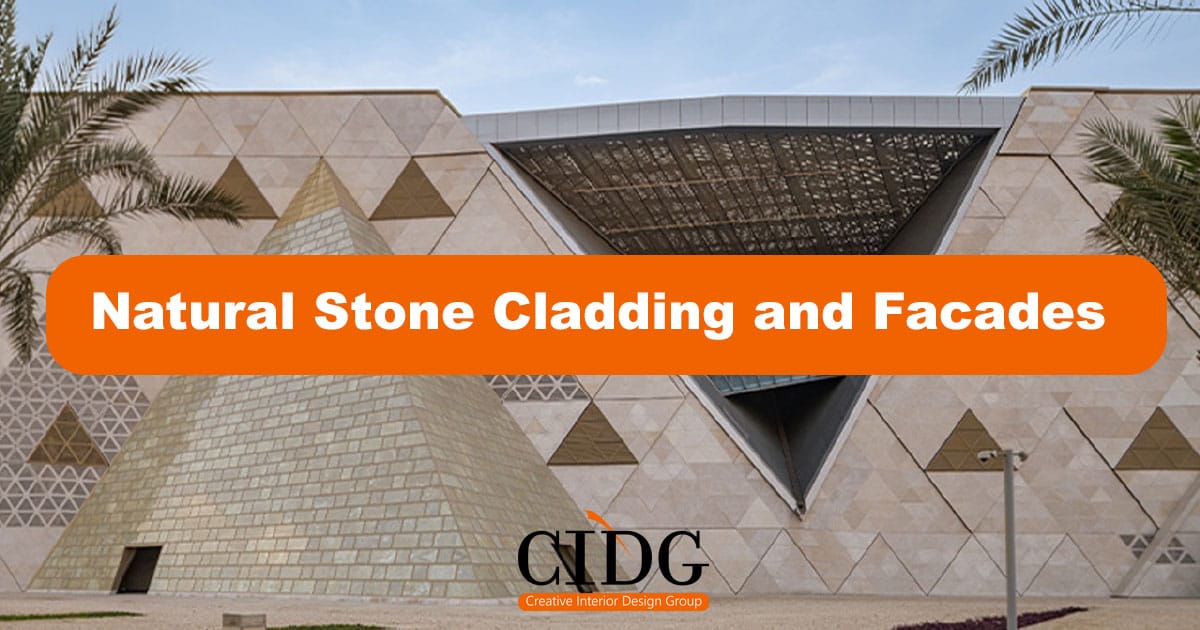
Exterior walls clad with materials like Galala marble or premium Egyptian marble instantly convey craftsmanship, permanence, and architectural quality.
Stone Cladding vs. Solid Masonry: Understanding the Difference
Although many people refer to any stone exterior as a “stone wall,” there are two fundamentally different construction systems. Understanding the difference is critical for safety, cost control, and design flexibility.
Stone Cladding (Stone Veneer)
Stone cladding involves fixing thin natural stone panels onto a concrete or masonry backing. The stone acts as a protective and decorative layer rather than a structural element.
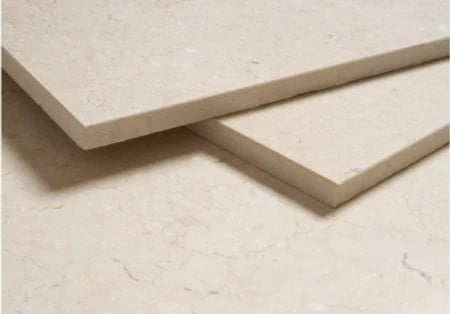
Typical cladding thickness ranges from 2 cm to 5 cm, with heavier-duty applications reaching up to 7 cm. This approach significantly reduces structural load while maintaining the visual depth of solid stone.
Stone cladding is widely used in villas, residential buildings, and commercial projects, offering flexibility in patterns, finishes, and materials such as split face stone for bold architectural textures.
Solid Stone (Load-Bearing Construction)
Solid masonry construction uses thick stone blocks—often 20 cm or more—as part of the building’s structural system. This traditional method was common in historical architecture but is rarely used today due to its extreme weight, high cost, and demanding foundation requirements.
Today, solid stone is typically reserved for heritage restorations rather than new builds.
The Verdict on Thickness
For modern exterior cladding, most experts agree that stone thickness between 5–7 cm offers the ideal balance. It provides visual depth comparable to solid stone while minimizing structural stress and cost.
Texture Is King: Why Vertical Surfaces Allow More Expression
Unlike floors, walls do not require foot comfort or slip resistance. This opens the door to bolder textures and deeper reliefs, giving architects and designers greater creative freedom.
Surface texture plays a defining role in how a building is perceived, often more impactful than color alone.
Why Rough Textures Work Best on Walls
Textured stone walls create shadows, depth, and visual weight. As sunlight moves, the façade changes character, offering a dynamic and engaging appearance throughout the day.
Key Exterior Stone Finishes
- Rock Face / Split Face: Deep, rugged texture ideal for dramatic façades and boundary walls.
- Bush Hammered: Uniformly textured surface that balances strength with refinement.
- Linear / Chiselled: Clean grooves suited for modern architectural designs.
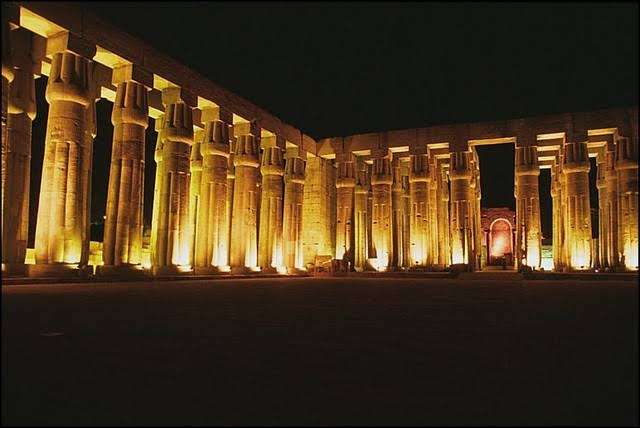
These finishes perform exceptionally well when paired with architectural lighting, especially up-lighting that enhances depth after sunset.
Practical Benefits: Insulation and Protection
Natural stone is not just decorative—it plays a functional role in protecting buildings from environmental stress.
Thermal Mass and Temperature Control
Stone’s high thermal mass allows it to absorb and release heat slowly. This moderates temperature fluctuations, helping interiors stay cooler in summer and warmer in winter, reducing long-term energy consumption.
Weather Resistance
High-density stone types such as Egyptian granite offer exceptional resistance to rain, wind, pollution, and freeze-thaw cycles. Unlike painted surfaces, stone does not peel, fade, or deteriorate easily.
Low Maintenance Advantage
Vertical stone surfaces naturally shed dust and dirt during rainfall. With no need for repainting or resurfacing, maintenance costs remain minimal over decades.
Design Styles and Patterns for Exterior Stone
Rustic and Organic Styles
Irregular layouts such as Opus Incertum (random stone patterns) create a relaxed, natural aesthetic. These styles are commonly used in resorts, garden walls, and countryside homes.
Modern and Contemporary Styles
Clean lines, rectangular panels, and uniform joints define modern stone façades. Honed finishes and mechanically fixed systems allow precise alignment and sleek geometry.
Feature Walls and Architectural Accents
Strategic stone placement often delivers greater impact than full coverage. Entrance pillars, chimney exteriors, courtyard walls, and boundary walls are ideal locations for feature stone.
Installation Techniques: Safety Comes First
Wet Mortar Fixing
This traditional method uses cement-based mortar and is suitable for low-rise structures and rough stone finishes. Proper surface preparation is critical for long-term adhesion.
Mechanical Fixing Systems
Mechanical systems use anchors and support rails, making them ideal for tall façades and large-format stone panels. They provide superior load distribution, wind resistance, and easier slab replacement.
Environmental and Long-Term Sustainability
Natural stone is quarried directly from the earth with minimal processing and no harmful chemicals. Its long lifespan reduces